
Welcome to the Wonderful World of Urban Sketching!
Get ready to dive into a unique experience where every street corner, every tree, and every square becomes a source of inspiration.
So, what exactly is Urban Sketching?
Urban Sketching is more than just a drawing technique; it’s a philosophy, a way of seeing the world. At its core, it’s all about capturing city life by drawing on the spot, right there on the street.
You can do it anytime, anywhere, and it’s a fantastic way to document your travels or experience your own city in a whole new way.
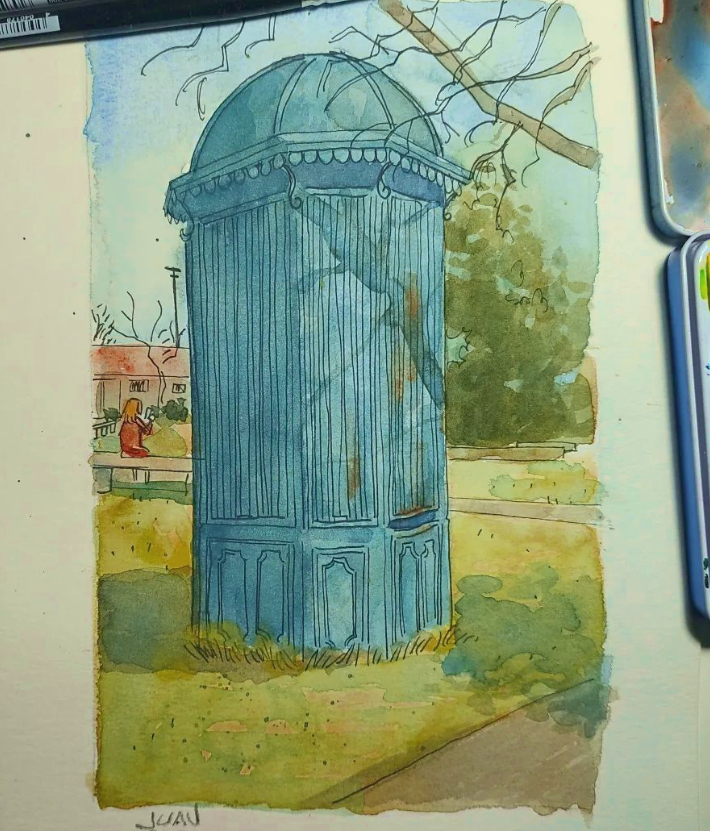
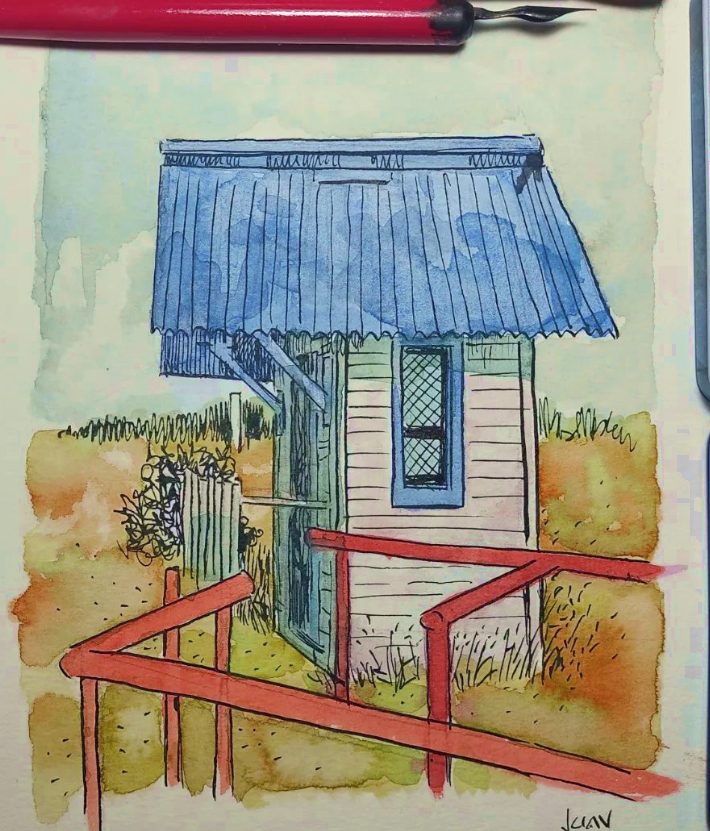
You don’t need to be a professional artist to give it a try, and you can use any materials you like—from a simple pencil, to fineliners (also called technical pens in some places), or even watercolors and markers if you want to add a splash of color.
The Manifesto
There’s a kind of “Urban Sketchers Manifesto” that goes like this:
- We draw on location, indoors or out, capturing what we see from direct observation.
- Our drawings tell the story of our surroundings, the places we live and where we travel.
- Our drawings are a record of a specific time and place.
- We are truthful to the scenes we witness.
- We support each other and come together as a community.
- We share our drawings online.
- We show the world, one drawing at a time.
This is the official Urban Sketching manifesto. I agree with most of it, but I have a different take on the first point. I live in a city where the winters are brutal and the summers feel like hell itself. So, I have no problem drawing from photographs and only sketching on location during the more moderate seasons.
How to Get Started
The first hurdle is overcoming shyness: Drawing in front of people can be intimidating. If you’re shy or feel embarrassed about people watching you draw, look for quieter spots. You could even start by practicing at home until you feel confident enough to take your skills to the streets.
If you’re already drawing outside, the best thing you can do is find a comfortable spot, preferably where you can sit down—drawing while standing can be really uncomfortable. If you have no other option, lean against a wall. If it’s a hot day, make sure you’re in the shade.
The ideal scenario is drawing from a bar or café terrace, but of course, that’s not always possible. Sometimes you just have to make do with whatever public seating you can find.
Materials
This is a broad and highly debatable topic. Many sketchers love using a full arsenal of materials: a folding stool, natural hair brushes, a water cup for their watercolors, etc.
In my case, I prefer to travel light. A sketchbook, a pencil, an eraser, fineliners, water brushes, and a small watercolor set. That’s all you really need, and it all fits into a small backpack.
Both approaches are perfectly valid. You’ll have to discover for yourself what kind of sketcher you are and how much gear you prefer to carry.
What Can I Draw?
Literally, anything you find on the street or inside your home.
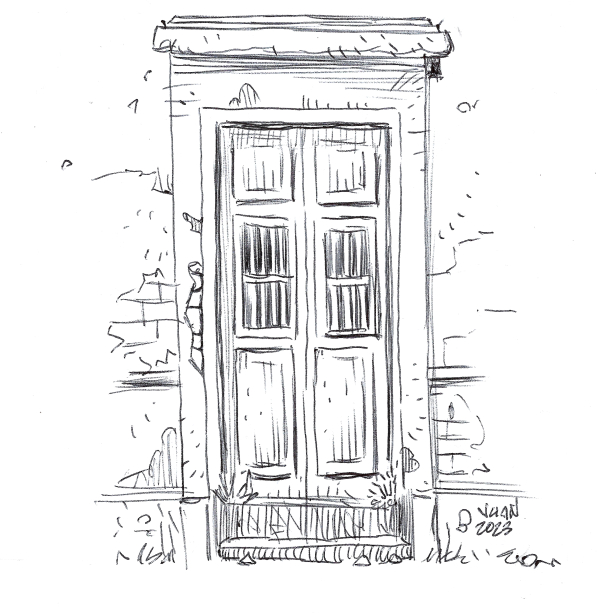
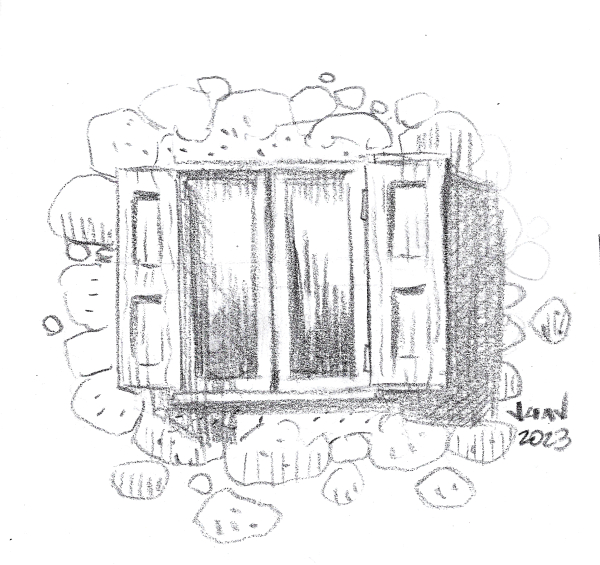
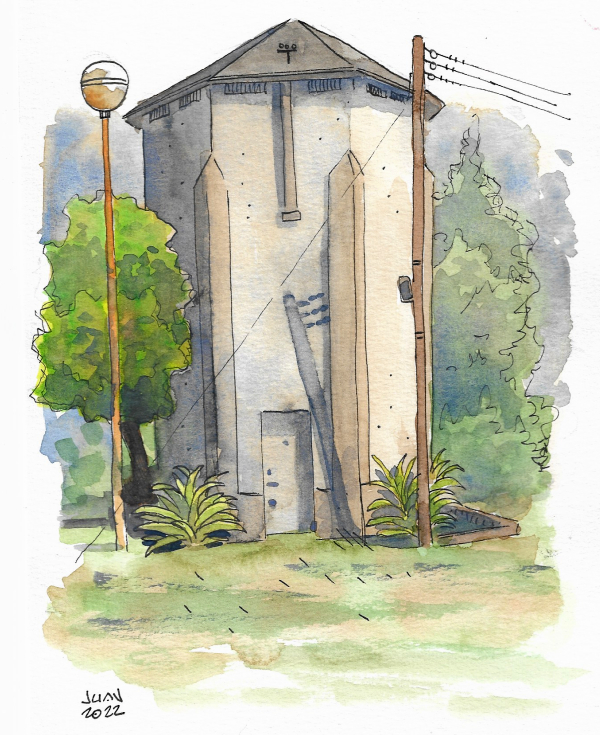
We often see impressive sketches full of buildings, people, and cars… But you can just as easily draw a single tree, a door, a window, or a street sign—whatever catches your eye!
If you’re just starting out, I recommend drawing smaller things to build your rhythm, gain experience, and get used to sketching. You can gradually move on to more complex scenes.
A Sketch is Not a Photograph
Remember that. A sketch is your interpretation of reality; it doesn’t need to be perfect. We sometimes tend to think that only realism is high art, but nothing could be further from the truth. The quality of your sketch comes from the expressiveness of your lines and colors, not from how much it looks like the thing you’re drawing.
The goal is to make a quick sketch, just a few minutes long. If your final drawing has some wonky proportions, don’t worry—you’re not an architect, and that building isn’t going to fall down just because you drew it a bit crooked :P.
This activity is about having fun. That’s the main thing you need to keep in mind: enjoy yourself. We should learn from our mistakes, but also celebrate them—those “flaws” are what give our sketches warmth and humanity.
Drawing is like a muscle; it needs exercise to grow. The more time you spend drawing, the better your results will be.
Drawing in a Group
I’m a bit of a “lone wolf,” but I have to admit it’s really fun to go out sketching with other people. If that interests you, look for Facebook groups in your city where artists meet up for urban sketching—you’re bound to find one.
Besides the company, it’s a great way to share techniques and tips with fellow artists. A real win/win situation.
Final Thoughts
I’m going to repeat what I’ve already said: Have fun. Drawing isn’t about the final destination; it’s about enjoying the journey. If your sketch (the destination) turns out a little “ugly,” it doesn’t matter. What’s important is that you enjoyed the process.
I hope you feel inspired to try urban sketching and hit the streets to draw interesting thing