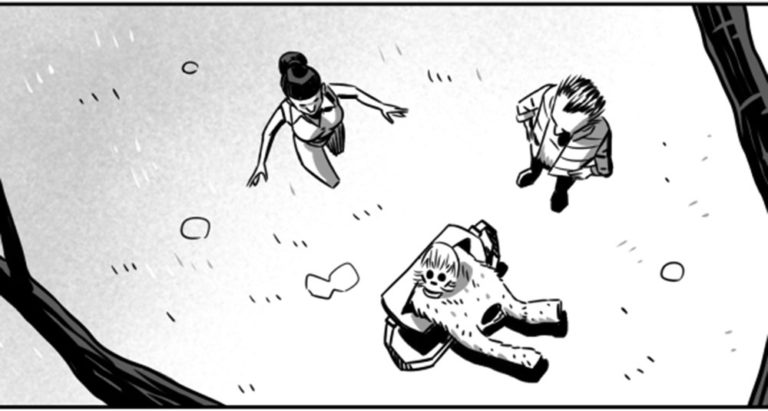
The shots and angles we use in comics come from audiovisual languages like film and TV. Each type of shot has a specific job in the visual storytelling of a comic.
Usually, the writer will describe what shot they want for each panel, but it’s our right as artists to change them if we think it makes the graphic narrative stronger.
Why Are Shots So Important?
Shots help pull the reader deeper into the story. They allow the reader to understand the characters’ expressions, their surroundings, and the actions they’re performing. By using a variety of shots, a comic page becomes much more interesting to look at. This doesn’t mean every page needs to have every type of shot—each page is unique and will require us to use a different number and combination of them.
Keep in mind that every shot has a purpose. We can’t just use them “because.” It’s really important to know them and understand what moments and situations they’re best for to make our visual storytelling flow.
Types of Comic Shots
Extreme Long Shot (ELS):
- What it is: Used to show where the story is taking place. It’s a very wide shot where the main character is the setting itself, not any figures that might appear.
- Why use it: Perfect for establishing the environment of a story or showing vast crowds, like an entire army.
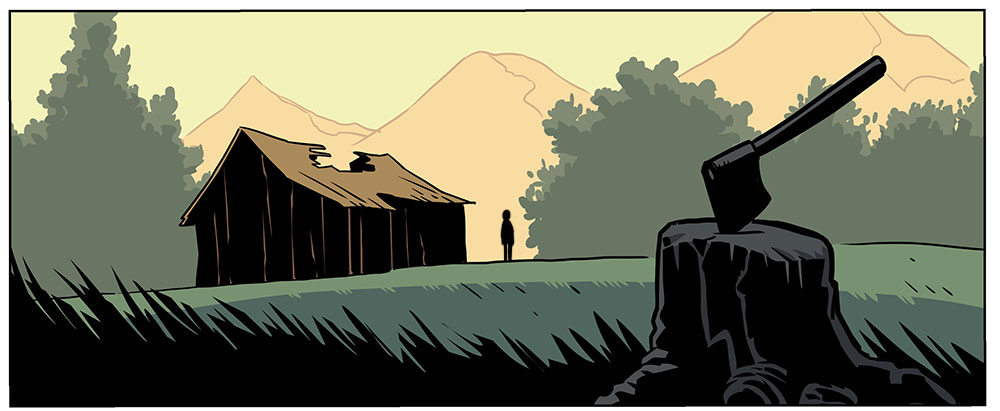
Long Shot (LS):
- What it is: You can see the whole character, as well as a large part of their surroundings. The character is seen in much more detail than in an Extreme Long Shot, but the focus of the panel is shared between the character and the background.
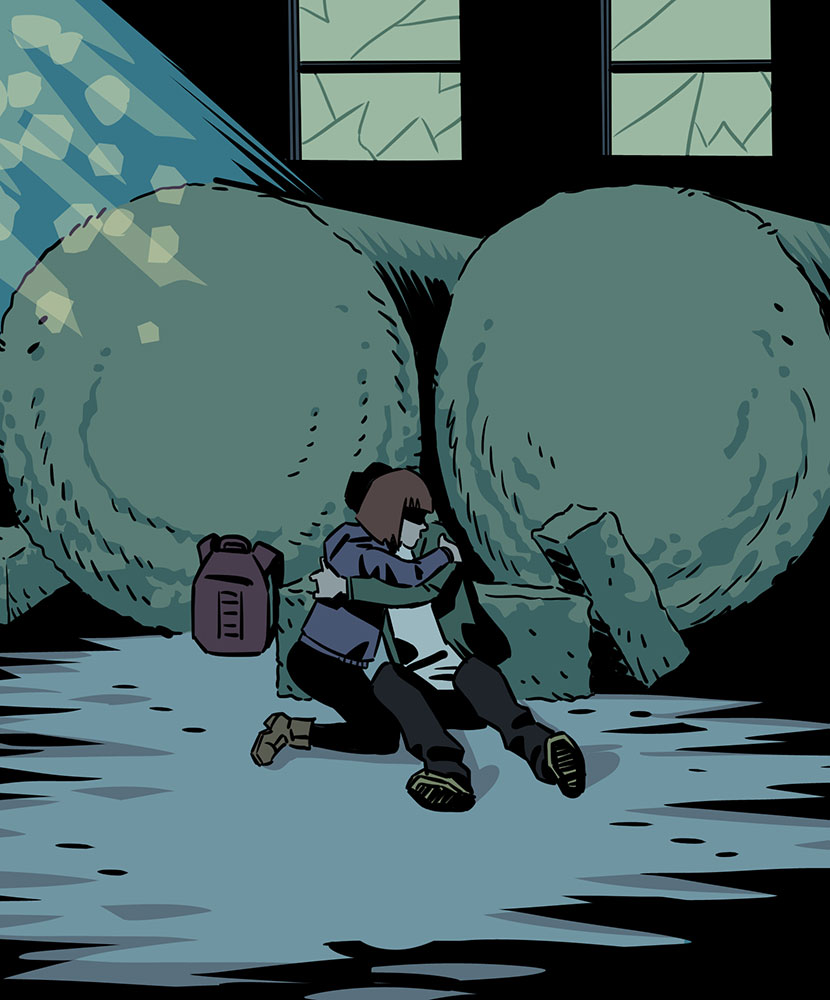
Full Shot (FS):
- What it is: The character is seen from head to toe. The environment no longer competes for attention with the character.
- Why use it: These are ideal for giving a sense of movement, like walking or running.
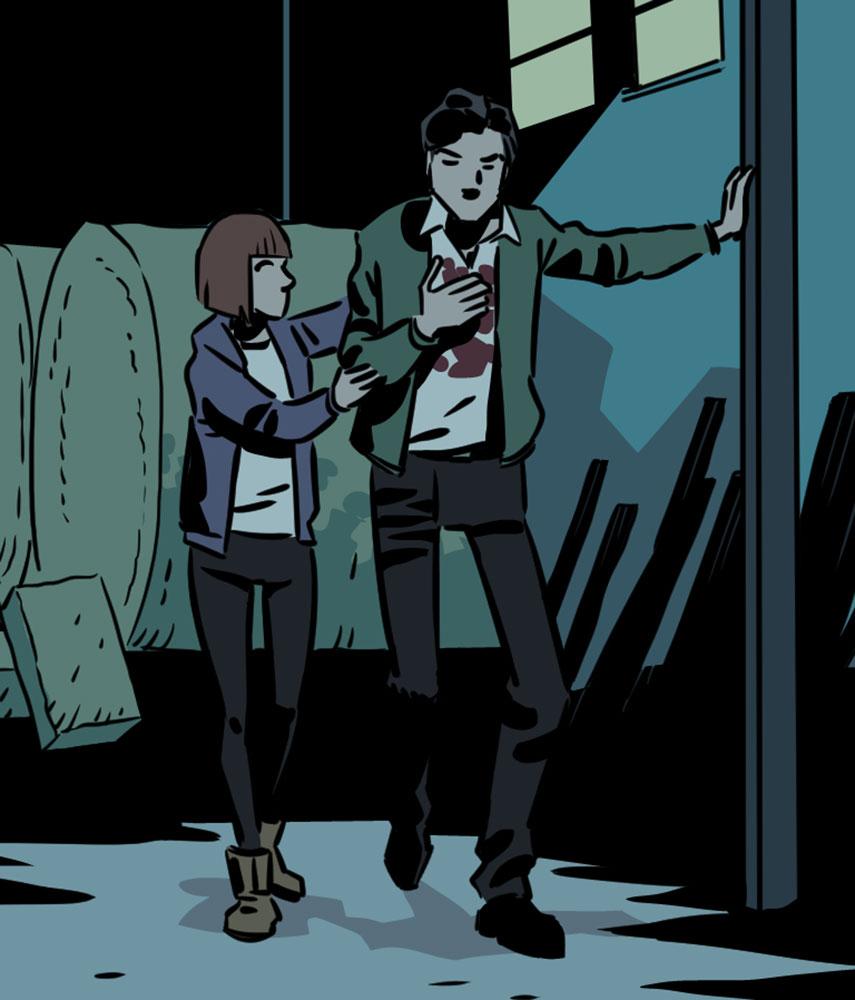
American Shot (AS):
- What it is: This one was born from Western movies in those classic duel scenes and is now a standard in comics and film. It frames the character from about mid-thigh up.
- Why use it: It’s great for showing a character’s posture and a bit of their environment, often used in dialogue scenes with multiple characters.
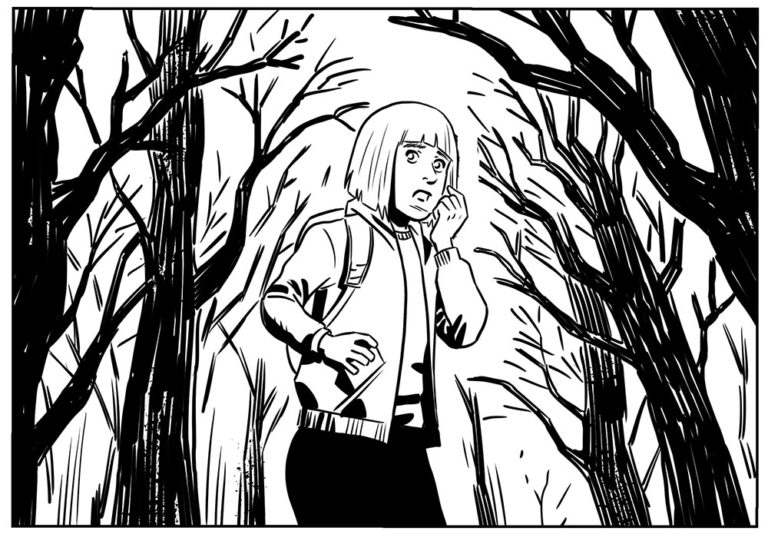
Medium Shot (MS):
- What it is: Frames your character from the waist or chest up (more or less). Here, the focus is directly on the character.
- Why use it: This is where we can start to clearly show the character’s emotions to the reader.
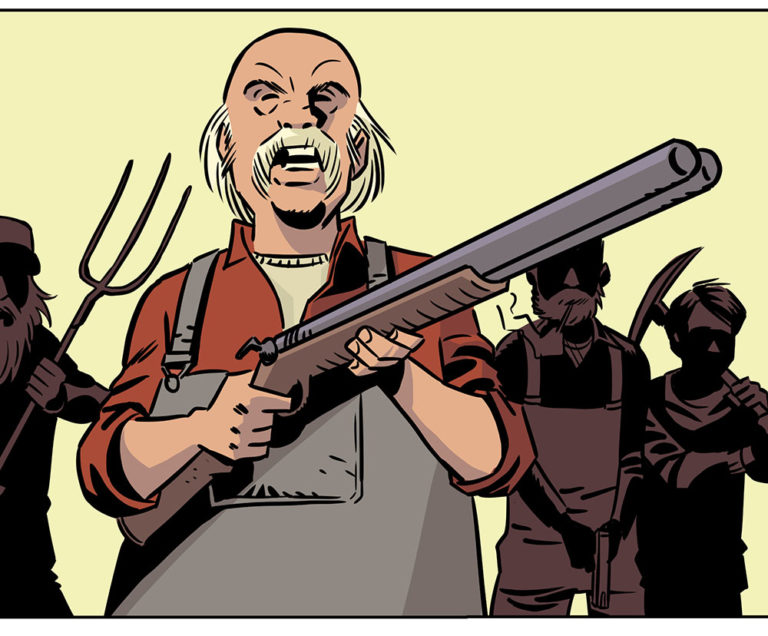
Close-Up (CU):
- What it is: The perfect shot for showing emotions and facial expressions. It goes from the shoulders to the head (approximately).
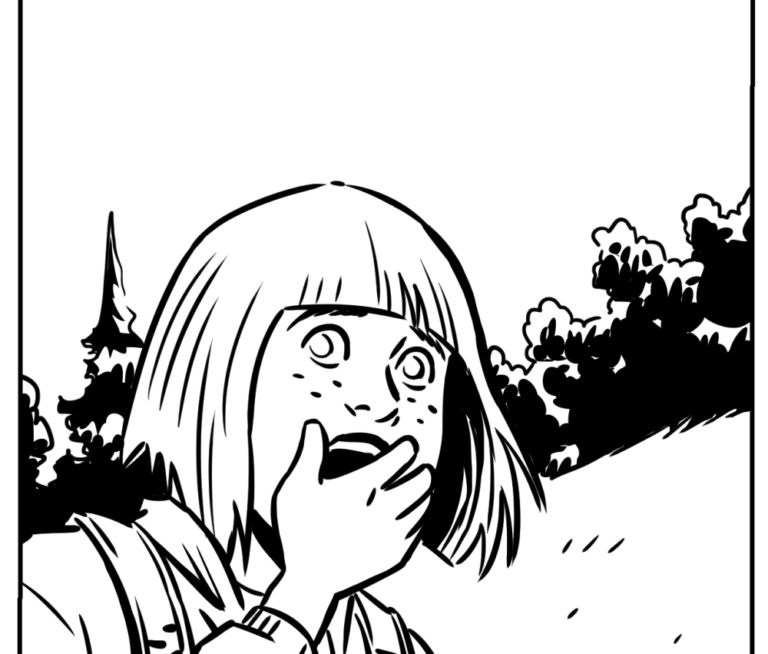
Extreme Close-Up (ECU):
- What it is: A much tighter shot than the Close-Up, focusing exclusively on the character’s face.
- Why use it: It’s commonly used to highlight a specific facial expression or show a detailed element on the page.
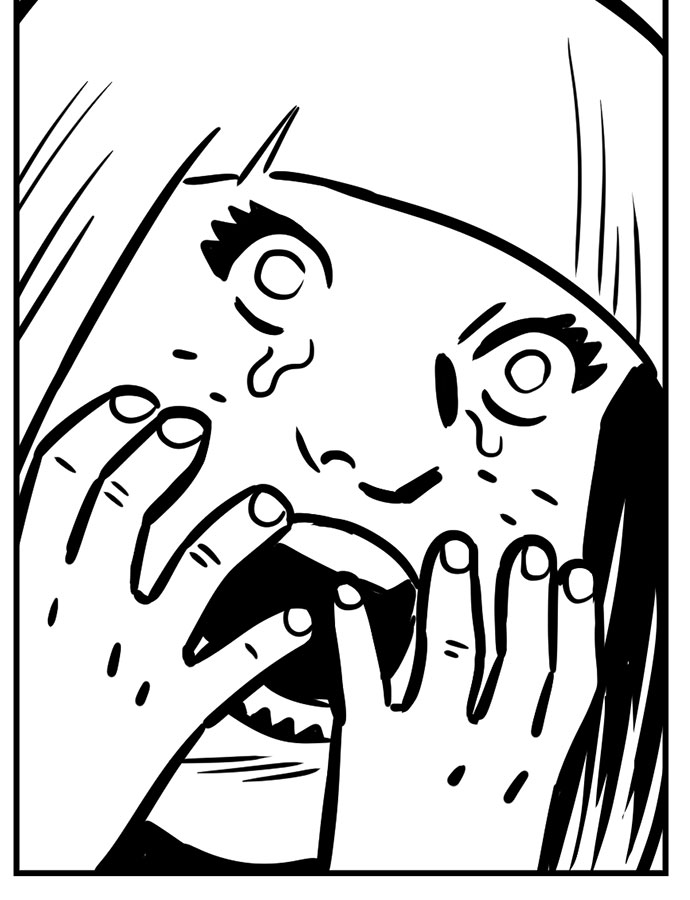
Detail Shot:
- What it is: A very tight close-up on a single element, like an eye, a ring, or a key.
- Why use it: Used to emphasize a detail that you don’t want the reader to miss.

Camera Angles
High Angle:
- What it is: The scene is viewed from above the horizon line, at about a 45-degree angle.
- Why use it: When used on a single character, it can create a feeling of inferiority or fear. In a wider shot, it helps show elements of the background.

Low Angle:
- What it is: The scene is viewed from below the horizon line, at about a 45-degree angle.
- Why use it: When used on a character, it enhances their heroic, powerful, or dominant qualities.
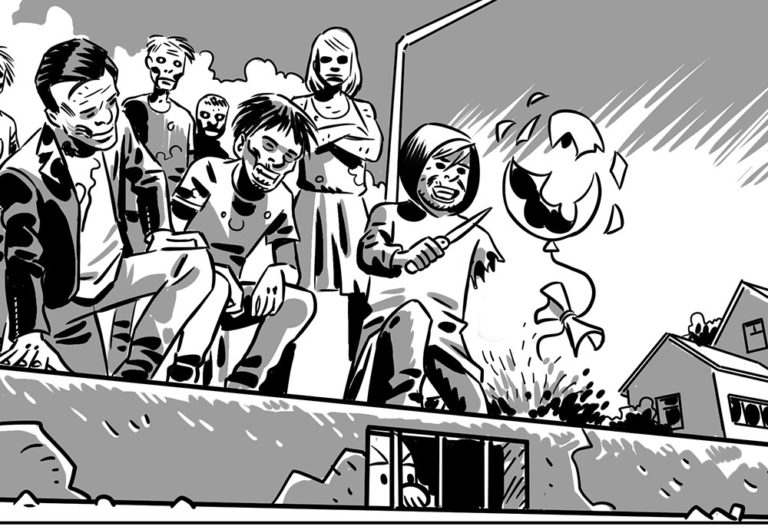
Overhead Shot (or Top-Down Shot):
- What it is: A view from directly above at 90 degrees, like looking straight down on a scene.
- Why use it: Excellent for showing spatial relationships or creating a unique, dramatic layout.